
By Mohsin Rabnawaz, founder of SKIMZO
CDL driver jobs pay a median of $57,440 a year per BLS data, though this varies by route type. OTR drivers earn $55,000 to $85,000+, regional $55,000 to $80,000, and local $50,000 to $75,000. Per-mile pay runs $0.45 to $0.75 depending on freight and experience.
Most guides on this topic scatter pay structures, licensing steps, and hiring realities across separate articles, leaving you to piece it together yourself. I pulled the pieces together here, including a detail that trips up a lot of new drivers: what “free” CDL training actually costs if you leave the job early.
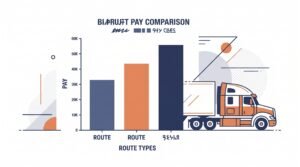
What CDL Driver Jobs Actually Pay by Route Type
Pay in trucking depends heavily on which type of route you drive, not just experience alone, so the single “average” figure hides real differences worth knowing upfront.
Over-the-road (OTR) drivers haul freight long distances and are away from home for extended periods. They typically earn $55,000 to $85,000 a year, with top carriers paying above $90,000 for experienced drivers with clean records. Regional drivers earn a similar $55,000 to $80,000 but stay closer to home with more predictable schedules. Local drivers earn somewhat less, $50,000 to $75,000, but sleep in their own bed every night, a real quality-of-life trade-off against the higher OTR ceiling.
The Bureau of Labor Statistics’ median of $57,440 a year comes from its May 2024 survey. That figure sits closest to the lower-middle of these ranges, reflecting that a large share of drivers work regional or local routes rather than the higher-paying OTR segment.
| Route Type | Typical Annual Pay | Trade-off |
|---|---|---|
| Over-the-Road (OTR) | $55,000–$85,000+ | Highest pay, extended time away from home |
| Regional | $55,000–$80,000 | Good pay, more predictable schedule |
| Local | $50,000–$75,000 | Lower pay, home every night |
| BLS median (all types) | $57,440 | Reflects broad mix of route types |
Understanding Per-Mile Pay Before You Sign Anything
Most CDL drivers aren’t paid a flat salary at all, they’re paid per mile, and understanding this structure matters more than any single advertised number.
Per-mile rates, commonly called CPM (cents per mile), typically run $0.45 to $0.75 or more depending on carrier, freight type, and experience. Here’s the calculation that actually matters: a $0.60 CPM rate at 2,500 miles a week works out to 0.60 × 2,500 = $1,500 a week. That’s roughly $78,000 a year before taxes. But a $0.65 CPM job offering only 1,800 guaranteed miles a week produces 0.65 × 1,800 = $1,170 a week, noticeably less despite the higher per-mile rate.
This is exactly why asking a carrier for average miles per week from actual driver records, not theoretical maximums, matters more than comparing CPM rates alone. A lower rate with more guaranteed miles frequently beats a higher rate with unreliable mileage.
Do CDL Endorsements Actually Pay More?
Yes, and understanding which ones matter can meaningfully change your earning ceiling without needing more years of experience first.
Endorsements are additional qualifications that authorize you to haul specific types of freight, each requiring an extra knowledge test, and for Hazmat specifically, a TSA background check on top of that. Specialized freight requiring these endorsements, including hazmat, oversized loads, and auto transport, generally pays 10 to 20 percent more than general freight, since fewer drivers are qualified to haul it. The reason the premium exists isn’t the freight itself, it’s the smaller pool of eligible drivers competing for those loads.
I’d treat endorsements as one of the fastest ways to raise your pay ceiling without switching carriers or waiting for a seniority-based raise. A driver who adds a Hazmat or Tanker endorsement early can access higher-paying loads well before they’d otherwise qualify for a raise through tenure alone.
The “Free” CDL Training Contract You Need to Read Carefully
This is the detail I found buried in one source that deserves far more attention than it usually gets.

Some carriers offer sponsored CDL training that covers your tuition upfront, which sounds like a straightforward win when you’re trying to enter the field without spending thousands out of pocket. What often isn’t emphasized clearly enough is that this comes structured as a contract, typically 12 to 18 months. A repayment balance is owed if you leave the company before the term ends.
I’d treat this as a real financial commitment, not a free gift. Before signing anything, read the exact repayment terms and buyout amount. Compare that against simply paying for an independent CDL school yourself. The math sometimes favors paying upfront if you’re not certain you’ll stay with that specific carrier for the full term.
CDL Class A vs. Class B: Which One Do You Actually Need?
This decision shapes your entire trucking career path, and it’s worth getting right before you enroll in any training program.
Class A covers combination vehicles, tractor-trailers with a separate trailer, and opens access to the most freight work, including long-haul OTR positions. Class B covers single vehicles without a separate trailer and is the typical route into local delivery, dump truck, refuse, and utility driving. Class B training is generally cheaper and faster to complete, and it keeps you home nightly by the nature of the work itself. Class A, by contrast, opens a wider range of higher-paying, longer-haul opportunities.
What Different CDL Driver Jobs Actually Look Like Day-to-Day
“CDL driver jobs” covers genuinely different daily realities, and matching the right one to your life circumstances matters as much as chasing the highest advertised pay.
OTR CDL driver jobs mean multi-week stretches on the road, sleeping in a truck cab, with the highest earning ceiling but the least predictable home time. Regional CDL driver jobs typically get you home weekly, trading some pay ceiling for a schedule you can actually plan around. Local CDL driver jobs, including delivery, dump truck, and utility routes, get you home nightly, usually paying the least of the three but offering the most stable daily routine.
| Route Type | Home Time | Best Fit For |
|---|---|---|
| OTR | Weeks at a time | Maximizing pay, few home obligations |
| Regional | Weekly | Balance of pay and predictability |
| Local | Nightly | Family/home stability, steady routine |
What Carriers Actually Screen For When Hiring
Getting a CDL is the easier part, and a clean license alone doesn’t guarantee carriers will actually hire you.
A clean or manageable Motor Vehicle Record (MVR) matters heavily, and serious violations from recent years are dealbreakers at most carriers. Drug and alcohol testing history, particularly pre-employment results, gets checked closely. Familiarity with Electronic Logging Device (ELD) systems, and being able to name the specific platform you trained on, signals real readiness rather than just textbook knowledge. Real references, even from jobs outside trucking, that confirm you’re reliable and show up consistently, carry genuine weight in a hiring decision.
I’d treat these four factors as more important to your actual hire-ability than the CDL itself. Carriers see plenty of freshly licensed drivers; what separates who actually gets hired quickly is this surrounding picture.

Is the Trucking Shortage Real, and What Does It Mean for You?
The “driver shortage” narrative gets repeated constantly, and it’s worth understanding what’s actually behind it before you count on it as a guarantee.
The American Trucking Associations estimates a shortage of roughly 60,000 drivers as of early 2026, down from a record 81,258 in 2021. Trucking is projected to have about 237,600 annual job openings, but this figure reflects mostly replacement positions from an aging, retiring workforce rather than pure job growth. That distinction matters: it means steady, ongoing demand for qualified drivers rather than a temporary hiring surge. That’s genuinely good news for job security, just not evidence that trucking companies are expanding headcount dramatically.
Company Driver vs. Owner-Operator: What Changes Later
Everything covered so far assumes you’re driving as a company employee, but it’s worth knowing what comes after, since many experienced drivers eventually consider going independent.
As a company driver, the carrier owns the truck, handles maintenance, and pays you a set rate, whether salary, hourly, or CPM, with predictable but capped income. As an owner-operator, you own or lease the truck yourself, take on fuel, maintenance, and insurance costs directly, and keep a larger share of what each load pays, which means real upside but also real financial risk if freight slows down.
I wouldn’t recommend jumping straight into owner-operator status without first building real experience as a company driver. Most sources describing this transition point to at least a few years of clean, steady company driving first, both to build the driving record carriers and lenders want to see, and to understand the industry well enough to price your own loads correctly. I’ll cover the full cost and pay breakdown of going independent in a separate guide.
A Real Number on Trucking’s Physical Demands
I want to include something most guides skip entirely, since deciding on a career should include the honest physical picture, not just the pay.
According to BLS occupational injury data, heavy and tractor-trailer truck drivers see approximately 328.2 days-away, restricted, or transfer cases per 10,000 full-time-equivalent workers, or roughly 3.28 per 100 workers. This isn’t meant to discourage you, most drivers complete full careers without serious incident, but it’s a real data point worth factoring into your decision alongside the pay numbers above.
How I Checked These Numbers
I want to be upfront about where these figures came from. The core median wage is anchored to BLS’s May 2024 survey, the most current official government data available at the time of this research. The route-type pay ranges and CPM figures came from industry-specific sources rather than general salary aggregators. Trucking pay structures are unusual enough that generic salary sites often miss the per-mile reality entirely.
Where a source described 2026 figures as estimates or projections rather than confirmed data, I noted that distinction rather than presenting every number with the same level of certainty.
The Short Version
CDL driver jobs pay a median of $57,440 a year per BLS data, with OTR drivers earning $55,000 to $85,000+, regional $55,000 to $80,000, and local $50,000 to $75,000. Per-mile pay typically runs $0.45 to $0.75, and guaranteed miles matter more than the advertised rate alone. Endorsements like Hazmat or Tanker can add 10 to 20 percent to your pay. Sponsored “free” CDL training often comes with a 12-to-18-month repayment contract worth reading carefully.
Class A opens the widest range of freight work, while Class B is cheaper, faster, and keeps you home nightly. Carriers screen heavily on driving record, drug testing history, and ELD familiarity. The driver shortage is real but reflects mostly replacement demand from an aging workforce, not explosive growth.
Frequently Asked Questions
How much do CDL driver jobs actually pay?
CDL driver jobs pay a median of $57,440 a year according to BLS data, though this varies significantly by route type. Over-the-road drivers typically earn $55,000 to $85,000 or more, regional drivers earn $55,000 to $80,000, and local drivers earn $50,000 to $75,000, with per-mile pay generally running $0.45 to $0.75 depending on carrier and freight type. Guaranteed weekly miles matter as much as the advertised rate.
How long does it take to get a CDL and get hired?
Most new drivers move from no license to a completed CDL in a matter of weeks, not years, through a certified training program. After completing training and passing the required knowledge and skills tests, most companies hire beginners within two to six weeks, since strong industry demand means clean, newly licensed drivers are often hired faster than in most other entry-level fields.
What’s the catch with “free” sponsored CDL training?
Sponsored CDL training that covers your tuition upfront is typically structured as a contract, usually 12 to 18 months, with a repayment balance owed if you leave the carrier before the term ends. It’s not truly free, it’s a financial commitment, so reading the exact repayment terms before signing matters as much as evaluating the training program’s actual quality.
What’s the difference between CDL Class A and Class B?
Class A covers combination vehicles like tractor-trailers and opens access to the widest range of freight work, including long-haul positions. Class B covers single vehicles without a separate trailer and typically leads to local delivery, dump truck, or utility driving. Class B training is generally cheaper and faster, and keeps drivers home nightly, while Class A opens higher-paying, longer-haul opportunities.
Is trucking actually in high demand right now?
Yes, the American Trucking Associations estimates a shortage of roughly 60,000 drivers as of early 2026. Trucking is projected to have about 237,600 annual openings, though this figure reflects mostly replacement positions from an aging, retiring workforce rather than pure job growth, meaning steady long-term demand for CDL driver jobs rather than a temporary hiring surge tied to one economic cycle.




2 Comments on “CDL Driver Jobs 2026: The Real Pay & Contract Warning”